
Showing posts with label summit county citizens voice. Show all posts
Showing posts with label summit county citizens voice. Show all posts
June 12, 2012
SandBoxBlogs: Summit County Citizens Voice "Morning photo: Out and about …"
All credit Bob Berwyn (Click title):


June 10, 2012
SandboxBlogs: Summit County Citizens Voice "Morning photo: Best of May (part 2)"
All credit: Bob Berwyn (Click title)


June 8, 2012
SandBoxBlogs: Summit County Citizens Voice "Morning photo: Oceans"
Where's 'SandBox Nanny'? lol.
Between having a limited cell signal "somewhere deep in a hidden volcanic lair up in the high mountains of western Colorado" and surgery on her fractured wrist; 'SandBox Nanny' has been MIA.
Thank you so much for your emails and text. Shouldn't be too much longer before a directional antenna takes care of the signal problem and my hand improves and heals daily.
Let's start this very long day of blog posts off with Bob Berwyn. Over, up and down on the Summit County Citizens Voice.
All credit Bob Berwyn (Click title).


June 3, 2012
SandBoxBlogs: Summit County Citizens Voice "Morning photo: Best of May (part 1)"
All credit Bob Berwyn (Click Title):
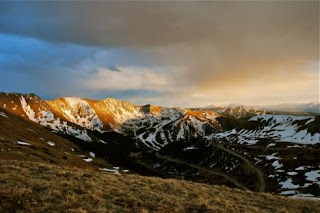
"SUMMIT COUNTY — May was quite a month for photography. It’s always been my favorite time of year in the high country, with snow on high, greening up in the valleys, wildflowers and sometimes wild weather that makes for dramatic skies. Here are some of the best shots from May 2012. If any of these images speak to you and you’d like see it framed and hanging on your wall, leave a note in the comment section, and for more Summit County scenes, visit our Imagekind online gallery, where you can order prints, unframed or framed. The gallery even has a nifty preview function where you see how the picture looks with different mattes...."
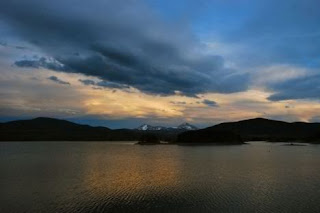


"SUMMIT COUNTY — May was quite a month for photography. It’s always been my favorite time of year in the high country, with snow on high, greening up in the valleys, wildflowers and sometimes wild weather that makes for dramatic skies. Here are some of the best shots from May 2012. If any of these images speak to you and you’d like see it framed and hanging on your wall, leave a note in the comment section, and for more Summit County scenes, visit our Imagekind online gallery, where you can order prints, unframed or framed. The gallery even has a nifty preview function where you see how the picture looks with different mattes...."


May 31, 2012
SandBoxBlogs: Summit County Citizens Voice "Morning photo: Paradise"
All credit Bob Berwyn (Click title):
"SUMMIT COUNTY — Today’s #FriFotos Twitter chat asks the intriguing question, what is paradise? After a long day of reporting environmental stories yesterday, I didn’t have a whole lot of time to spend on creating a photo essay for the theme, but luckily I didn’t need it! A quick two-finger scroll through my archives revealed paradise at nearly every stop, from the wildlands of Arizona and Utah, to the beaches of the Caribbean and right here in my own backyard. As a photographer and traveler, I feel like I see a little bit of paradise each day. Share your own version by uploading pics to the Twitter stream and giving them the #FriFotos hashtag. See you there!...."


"SUMMIT COUNTY — Today’s #FriFotos Twitter chat asks the intriguing question, what is paradise? After a long day of reporting environmental stories yesterday, I didn’t have a whole lot of time to spend on creating a photo essay for the theme, but luckily I didn’t need it! A quick two-finger scroll through my archives revealed paradise at nearly every stop, from the wildlands of Arizona and Utah, to the beaches of the Caribbean and right here in my own backyard. As a photographer and traveler, I feel like I see a little bit of paradise each day. Share your own version by uploading pics to the Twitter stream and giving them the #FriFotos hashtag. See you there!...."


May 30, 2012
SandBoxBlogs: Summit County Citizens Voice "Colorado: A spring hike on twin 14ers"
All Credit: Kim Fenske (Click title)


May 29, 2012
SandBoxBlogs: Summit County Citizens Voice "Morning photo: The break of dawn"
All credit Bob Berwyn:
"SUMMIT COUNTY — There’s a moment, perhaps a few moments, right around sunrise when the light is as good as it’s ever going to get. It’s pure magic, really, and if, as a photographer, you’re in the right place when it happens, then all that you need is the technical know-how, and maybe a few good lenses. Sometimes it doesn’t always come out the way you expected, and other times, when you get home and download the images, all you can say is, “Wow!” (See more? Click title)

"SUMMIT COUNTY — There’s a moment, perhaps a few moments, right around sunrise when the light is as good as it’s ever going to get. It’s pure magic, really, and if, as a photographer, you’re in the right place when it happens, then all that you need is the technical know-how, and maybe a few good lenses. Sometimes it doesn’t always come out the way you expected, and other times, when you get home and download the images, all you can say is, “Wow!” (See more? Click title)

May 28, 2012
SandBoxBlogs: Summit County Citizens Voice "Morning photo: Summit gallery"
All Credit Bob Berwyn:
"SUMMIT COUNTY — Sometimes I’m amazed at how many reasonably good photos I’ve been able to take within just a few mile radius of our home in Frisco. Even though the scenic backdrop doesn’t change all that much, there is always some new element of light or clouds or reflections that makes the view seen brand new. In the last few days, I’ve picked out a few of my favorites and created a brand new gallery at my Imagekind site exclusively with Summit Country landscape shots. I hope you’ll check it out, perhaps buy a print (you can also preview and order them with different mattes and frames) and pass the info along to your friends. The gallery is online here."


"SUMMIT COUNTY — Sometimes I’m amazed at how many reasonably good photos I’ve been able to take within just a few mile radius of our home in Frisco. Even though the scenic backdrop doesn’t change all that much, there is always some new element of light or clouds or reflections that makes the view seen brand new. In the last few days, I’ve picked out a few of my favorites and created a brand new gallery at my Imagekind site exclusively with Summit Country landscape shots. I hope you’ll check it out, perhaps buy a print (you can also preview and order them with different mattes and frames) and pass the info along to your friends. The gallery is online here."


May 27, 2012
SandBoxBlogs: Summit County Citizens Voice " Morning photo: Last snow? Probably not"
All credit Bob Berwyn (Click title):


May 26, 2012
SandBoxBlogs: Summit County Citizens Voice "Seagrasses vital to sequestering atmospheric carbon"
Bob Berwyn:
"SUMMIT COUNTY — Coral reefs may get all the glory when it comes to biodiversity, but new research shows that relatively unsung seagrass communities may play a vital role in sequestering atmospheric carbon.
Any carbon that’s not in the atmosphere means it’s not trapping heat, so cultivating and protecting existing coastal seagrass communities could be a vital part of the solution to climate change, according to the first global analysis of carbon storage in seagrass.
The results of the study suggest that seagrass meadows can store up to twice as much carbon as the world’s temperate and tropical forests — up to 83,000 metric tons of carbon per square kilometer, mostly in the soils beneath them, as compared to typical terrestrial forests, which store about 30,000 metric tons per square kilometer, most of which is in the form of wood.
The research also estimates that, although seagrass meadows occupy less than 0.2 percent of the world’s oceans, they are responsible for more than 10 percent of all carbon buried annually in the sea.
“Seagrasses only take up a small percentage of global coastal area, but this assessment shows that they’re a dynamic ecosystem for carbon transformation,” said James Fourqurean, the lead author of the paper and a scientist at Florida International University and the National Science Foundation’s (NSF) Florida Coastal Everglades Long-Term Ecological Research (LTER) site.
The Florida Coastal Everglades LTER site is one of 26 such NSF LTER sites around the world in ecosystems from forests to tundra, coral reefs to barrier islands.
“Seagrasses have the unique ability to continue to store carbon in their roots and soil in coastal seas,” said Fourqurean. “We found places where seagrass beds have been storing carbon for thousands of years.”...."
(Read more? Click title)
"Unapologetic pursuit and tracking of patterns within the news others make since 2010."
SandBoxBlogs: Summit County Citizens Voice "Friday Fotos: Waterfalls!"
All Credit Bob Berwyn (Click title):


May 25, 2012
SandBoxBlogs: Summit County Citizens Voice "Morning photo: Leftovers …"
Credit Bob Berwyn by clicking title of post.


May 22, 2012
SandBoxBlogs: Summit County Citizens Voice "Colorado: Landscape-level preservation eyed in San Luis Valley to protect wetlands, riparian corridors & wildlife"
Bob Berwyn:
"SUMMIT COUNTY —The U.S. Fish and Wildlife Service is taking some first steps toward a large-scale preservation effort in Colorado’s San Luis Valley that could ultimately protect up to 530,000 acres of wetlands, riparian corridors, and important upland habitats through voluntary conservation easements.
The agency recently held public meetings to get input from landowners and other stakeholders in the region, helping to formulate the framework for a locally-led, voluntary, cooperative partnership that will also help preserve traditional land uses.
“This project represents another opportunity for the Service to partner with the people of the San Luis Valley to protect this important landscape for both wildlife and the people that have worked these lands for generations,” said regional USFWS director said Steve Guertin.
“By beginning our partnerships in the southern Sangre de Cristo Mountains, we can determine the level of interest among landowners before exploring whether to broaden those partnerships to other partners elsewhere in the Valley. At every step, we want to listen, learn, and do all we can to support the goals and vision of local landowners and the local community,” Guertin said.
The goal of the draft land protection plan is to work with landowners to buy perpetual conservation easements for up to 530,000 acres of land. Conservation easements maintain traditional uses and protect natural resource values, but extinguish most development rights.
Initial efforts will focus on the southern Sangre de Cristo Mountains, where, because of the stewardship efforts of private landowners, there are opportunities to protect important wildlife migration corridors over federal, state, and private lands. If partnerships in the southern Sangre de Cristo Mountains are successful and of interest to private landowners, the Service would – at a later date – consider whether to pursue similar partnerships with private landowners in other parts of the proposed San Luis Valley Conservation Area......." (Read more? Click title)
"Unapologetic pursuit and tracking of patterns within the news others make since 2010."
May 21, 2012
SandBoxBlogs: Summit County Citizens Voice "Biodiversity: Report touts Endangered Species Act wins"
Bob Berwyn:
"SUMMIT COUNTY — Like it or not (and some people definitely don’t), the Endangered Species Act does what it’s supposed to do when it’s implemented the way it’s supposed to be, according to the Center for Biological Diversity.
The conservation group last week released an analysis of how the ground-breaking environmental law has been effective in recovering at least some species that are threatened or endangered. Read and download the full report at http://esasuccess.org/.
While some critics will quibble about the species selected for the study, the fact remains that, if habitat is protected, the act can work. Release of the report comes against a backdrop of renewed attacks on the Endangered Species Act, most recently when Congress unilaterally acted to de-list wolves in the Northern Rockies — the first time lawmakers have succeeded in making a political end run around the law.
Additionally, Congress has repeatedly sought to defund the U.S. Fish and Wildlife Service’s ability to list and recover species that clearly need protection.
“There are Endangered Species Act success stories in every state in America,” said Kierán Suckling, executive director of the Center for Biological Diversity. “No other law in the world has done so much to rescue species from the brink of extinction and put them on a path to recovery. Simply put, the act has been remarkably successful.”
On the other side, critics of law often make vague charges that the law “destroys rural American communities,” without ever showing any specific examples, like in this coment on a post in the New Century of Forest Planning blog (scroll down to the comment section).
The review examined population trends of plants and animals protected by the Endangered Species Act in all 50 states, including gray wolves in the northern Rocky Mountains, Florida panthers, Aleutian Canada geese and California condors. Again and again, the analysis finds species on a positive trajectory toward recovery — and in some cases exceeding expectations..." (Read more? Click title)
"Unapologetic pursuit and tracking of patterns within the news others make since 2010."
SandBoxBlogs; Summit County Citizens Voice "Colorado: 2012 Solar Eclipse photos"
All credit Daniel McVey via Summit Voice (Click title):


May 20, 2012
SandBoxBlogs: Summit County Citizens Voice "Morning photo: First light"
And we never get tired of seeing them. All credit Bob Berwyn:
"SUMMIT COUNTY — I’ve been getting up early the past few weeks to do some sunrise photography — plus it’s a good excuse to get some exercise for me, and the dogs. Yesterday morning was wonderful, with a broken low cloud deck creating a dramatic scene above the reservoir and around our local peaks. Other days, I use the reservoir surface as close-up mirror to enhance foreground lighting. In any case, it’s never the same twice, so I never get tired of photographing these scenes....." (See more? Click title)


"SUMMIT COUNTY — I’ve been getting up early the past few weeks to do some sunrise photography — plus it’s a good excuse to get some exercise for me, and the dogs. Yesterday morning was wonderful, with a broken low cloud deck creating a dramatic scene above the reservoir and around our local peaks. Other days, I use the reservoir surface as close-up mirror to enhance foreground lighting. In any case, it’s never the same twice, so I never get tired of photographing these scenes....." (See more? Click title)


May 18, 2012
SandBoxBlogs: Summit County Citizens Voice "Morning photo: Sunset and clearcuts …"
( I know...I know...it's far from 'morning' now....just look at the nice photos and hush.....it's busy times...)
All credit Bob Berwyn:
"SUMMIT COUNTY — A few images from the daily peregrinations along the shore of the reservoir. I usually try to assiduously avoid the clearcut areas in photos because really, who wants to see pictures of stumps. But every now and then, it’s probably a good reminder, especially with a warming climate that may very well bring additional blight to high country ecosystems....."
(See more? Click title)


May 17, 2012
SandBoxBlogs: Summit County Citizens Voice "Study suggests Southwest fires driven by year-to-year weather cycles rather than long-term climate variations"
Bob Berwyn:
"SUMMIT COUNTY — A detailed analysis of historic fire-scar records and tree-ring data going back centuries offers more evidence that recent mega-fires in the Southwest are unprecedented and likely a result of widespread fire suppression.
While many of today’s southwestern forests haven’t seen a fire in more than 100 years, historical records show that, in the pre-suppression era, they rarely went as long as 40 or 50 years without a low-intensity ground fire.
To reach their conclusions, researchers at Southern Methodist University used a statistical model that encompassed 1,500 years of climate and fire patterns. They wanted to test if today’s dry, hot climate alone is causing the megafires that routinely destroy millions of acres of forest.
The results were striking. Year-to-year weather patterns that drive fire activity seemed to stay the same against the backdrop of larger climate cycles, according to SMU fire anthropologist Christopher I. Roos.
“The U.S. would not be experiencing massive large-canopy-killing crown fires today if human activities had not begun to suppress the low-severity surface fires that were so common more than a century ago,” said Roos, an assistant professor in the SMU Department of Anthropology....."
(Read more? Click title)
"Unapologetic pursuit and tracking of patterns within the news others make since 2010."
SandBoxBlogs: Summit County Citizens Voice "Morning photo: Camera doodles …"
All credit Bob Berwyn (Click title):


May 16, 2012
SandBoxBlogs: Summit County Citizens Voice "Colorado: Summit, Grand counties sign deal with Denver Water"
I am so glad to see this. What began well over a year or so ago with negotiations is now signed. Congratulations on a cooperative job well done to all entities involved.
As always, one of the most respected and trusted environment journalists, Bob Berwyn brings the best coverage of this historic news. Up, over and down on the Summit County Citizens Voice.
Bob Berwyn:
"SUMMIT COUNTY — A major water agreement aimed at ending decades of feuding and litigation between the Front Range and the West Slope moved one step closer to completion this week, as Denver Water, Summit County and Grand County representatives inked the deal at a ceremony in Hot Sulphur Springs.
Along with being hailed as a model of collaboration by Colorado Gov. John Hickenlooper, the deal also gives all the parties some certainties as to the future management and disposition of the state’s most precious resource.
Against a backdrop of an intensifying mountain drought, Hickenlooper said this year’s dry conditions magnify the need for cooperative solutions and highlight the fragility of the state’s rivers in the face of possible climate change impacts and increasing demand from a growing population.
“Some of our watersheds are reporting the driest conditions in our recorded history … this puts Colorado on a better footing, with more secure water sources both for headwaters counties and Denver,” Hickenlooper said.
"Unapologetic pursuit and tracking of patterns within the news others make since 2010."
As always, one of the most respected and trusted environment journalists, Bob Berwyn brings the best coverage of this historic news. Up, over and down on the Summit County Citizens Voice.
Bob Berwyn:
"SUMMIT COUNTY — A major water agreement aimed at ending decades of feuding and litigation between the Front Range and the West Slope moved one step closer to completion this week, as Denver Water, Summit County and Grand County representatives inked the deal at a ceremony in Hot Sulphur Springs.
Along with being hailed as a model of collaboration by Colorado Gov. John Hickenlooper, the deal also gives all the parties some certainties as to the future management and disposition of the state’s most precious resource.
Against a backdrop of an intensifying mountain drought, Hickenlooper said this year’s dry conditions magnify the need for cooperative solutions and highlight the fragility of the state’s rivers in the face of possible climate change impacts and increasing demand from a growing population.
“Some of our watersheds are reporting the driest conditions in our recorded history … this puts Colorado on a better footing, with more secure water sources both for headwaters counties and Denver,” Hickenlooper said.
Most importantly for Denver Water, Summit and Grand counties agree not to oppose a plan to expand diversions from the West Slope through the Moffat Tunnel Collection System, a project that, in its present form, is still bitterly opposed by conservation and river advocacy groups....."
(Read more? Click title)
Subscribe to:
Posts (Atom)